



By Kristina Braly, MD — Founder, AEMBR

If you've recently turned over your laundry detergent bottle and searched every line of the ingredient list, you won't find 1,4-dioxane listed there. That's not because it's absent — it's because 1,4-dioxane is a process contaminant, not an intentional ingredient, and U.S. law does not require manufacturers to disclose it. As a physician who built a cleaning brand specifically to eliminate ingredients I wouldn't want near my family's skin, 1,4-dioxane is one of the first things I screened out. Here's everything the science says about what it is, where it hides, and how to actually avoid it.
What Is 1,4-Dioxane?
1,4-Dioxane (CAS 123-91-1) is a synthetic chemical compound — a cyclic ether — that forms as an unintended byproduct during a manufacturing process called ethoxylation. It is not a fragrance, a surfactant, a preservative, or any functional ingredient anyone intends to add to a product. It's contamination left over from how certain cleansing agents are made.
The U.S. Environmental Protection Agency (EPA) has classified 1,4-dioxane as a probable human carcinogen (Group B2), based primarily on animal studies showing dose-dependent liver and nasal-cavity tumors. The National Toxicology Program (NTP) lists it as reasonably anticipated to be a human carcinogen. California's Office of Environmental Health Hazard Assessment (OEHHA) has established a Proposition 65 No Significant Risk Level for 1,4-dioxane of 30 micrograms per day through oral exposure.
The compound is also persistent — it doesn't biodegrade easily, which makes it a water contamination concern beyond just skin exposure.
Expert guidance on clean ingredients, home fragrance, and living well — from our physician-authored blog.
How Does 1,4-Dioxane End Up in Laundry Detergent?
The pathway is chemical manufacturing. Several widely used surfactants — the cleansing agents that lift soil and grease from fabric — are made by reacting raw materials with ethylene oxide in a process called ethoxylation. The goal is to produce gentle, water-soluble surfactants like:
- Sodium laureth sulfate (SLES) — distinct from sodium lauryl sulfate (SLS), which is not ethoxylated
- PEG compounds (polyethylene glycols, e.g., PEG-100 stearate, PEG-6 laurate)
- Polysorbates (polysorbate 20, 80, etc.)
- Ethoxylated alcohols (ingredients ending in "-eth," like ceteareth-20 or laureth-7)
During ethoxylation, 1,4-dioxane forms spontaneously as a side reaction. Without additional purification steps — specifically vacuum stripping — the contaminant stays in the finished surfactant. Some manufacturers perform this step; many do not, or they perform it incompletely. The result is a finished detergent that may contain parts-per-million levels of a probable carcinogen with no label disclosure required.
What the Testing Data Shows
Independent testing has repeatedly found 1,4-dioxane in mainstream personal care and cleaning products. The Environmental Working Group (EWG) and the Campaign for Safe Cosmetics have published testing results showing measurable 1,4-dioxane in baby shampoos, liquid soaps, and laundry detergents — including products marketed as "gentle" or "free and clear."
A 2020 study published in Environmental Science & Technology Letters found 1,4-dioxane in 65 of 100 personal care and household cleaning products tested — at concentrations ranging from below detection limits to over 30 ppm. Laundry detergents were among the higher-contaminated categories.
New York became the first state to enact enforceable 1,4-dioxane limits for consumer products. As of 2022, cleaning products sold in New York must contain no more than 2 ppm 1,4-dioxane, dropping to 1 ppm in 2023. This has pushed some major manufacturers to clean up their supply chains — but it applies only to New York, and enforcement is limited.
SLS vs. SLES: Why the "Eth" Matters
This distinction trips up a lot of people. Sodium lauryl sulfate (SLS) is a surfactant made without ethoxylation — it does not carry a 1,4-dioxane contamination risk. Sodium laureth sulfate (SLES) is the ethoxylated version, and it can carry residual 1,4-dioxane depending on how the manufacturer purifies it.
The "-eth" in an ingredient name is your first signal. Any ingredient that has been ethoxylated will typically have "eth" embedded in its INCI name or end in "-PEG," "-polysorbate," or similar. That doesn't mean contamination is guaranteed — but it means contamination is possible, and the brand should be able to tell you whether they test for it.
| Ingredient Name | Ethoxylated? | 1,4-Dioxane Risk? | Notes |
|---|---|---|---|
| Sodium lauryl sulfate (SLS) | No | No | Different from SLES; harsher on skin |
| Sodium laureth sulfate (SLES) | Yes | Possible | Very common in liquid detergents |
| PEG compounds (PEG-100, etc.) | Yes | Possible | Look for "PEG-" prefix |
| Polysorbate 20, 60, 80 | Yes | Possible | Common in fragrance dispersants |
| Laureth-7, Ceteareth-20 | Yes | Possible | "Eth" in name = ethoxylated |
| Cocamidopropyl betaine | No | No | Derived from coconut oil, not ethoxylated |
| Alkyl polyglucoside (APG) | No | No | Plant-derived, clean surfactant |
| Sodium cocoyl isethionate | No | No | Gentle, not ethoxylated |
Is It on the Label? Why You Can't Find It
No. Federal law in the United States — specifically the Fair Packaging and Labeling Act — requires disclosure of functional ingredients in cleaning products, but not contaminants or processing byproducts. Because 1,4-dioxane is never intentionally added to any product, manufacturers are not required to list it.
The FDA has a similar gap for personal care products. Even though the agency has urged manufacturers to voluntarily reduce 1,4-dioxane levels, no binding federal standard exists for cleaning products or personal care. You cannot find 1,4-dioxane on a label, because no label is required to show it.
This is precisely why ingredient transparency at the formula level matters. The question isn't just "what's in this?" but also "what happened during the manufacturing of each ingredient?"
How Much Exposure Is Typical?
Risk depends on concentration and exposure route. The primary exposure pathway from laundry detergent is dermal contact — residue remaining on laundered clothing and bedding — and to a lesser extent inhalation during washing. Oral ingestion is not a significant pathway for laundry products.
The EPA's IRIS assessment sets an oral cancer slope factor and a dermal absorption rate for 1,4-dioxane. At the concentrations found in typical consumer products (1–30 ppm in the product, diluted further in wash water, then rinsed and dried), the residue on clean fabric is very small — but chronic daily exposure to a probable carcinogen across multiple product categories adds up, particularly for children whose skin is more permeable.
From a precautionary standpoint — which is how I approach both medicine and formulation — the right answer is simply to eliminate the exposure pathway entirely. If you're not using ethoxylated surfactants, there is no 1,4-dioxane to manage.
Brands That Have Reduced or Eliminated It
Several manufacturers have responded to consumer pressure and the New York regulation by either reformulating away from ethoxylated surfactants or by adding vacuum stripping purification. Third-party certifications that screen for 1,4-dioxane include:
- EPA Safer Choice — requires that ethoxylated ingredients have been tested and confirmed to contain less than 10 ppm 1,4-dioxane; currently pushing toward zero
- EWG Verified — products certified under this program are screened for 1,4-dioxane as part of the verification process
- MADE SAFE — screens for 1,4-dioxane in certified products
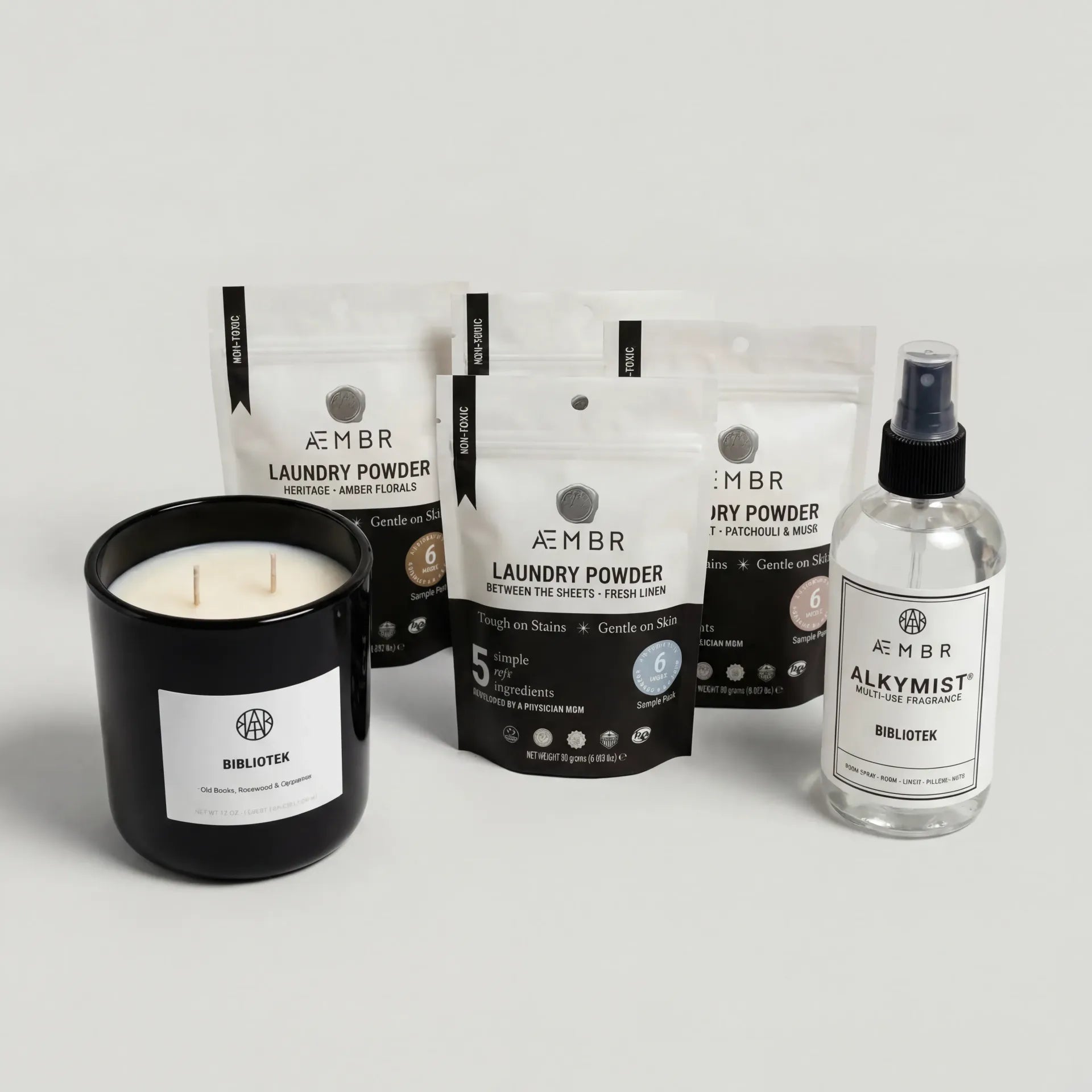
Alternatively, brands that don't use ethoxylated surfactants at all — and formulate around plant-derived, non-ethoxylated alternatives like alkyl polyglucosides — have no 1,4-dioxane risk by design. This is the approach I took with AEMBR Laundry Powder: building from a surfactant base that doesn't require ethoxylation.
How to Check Your Current Detergent
Here's the practical audit I'd run on any bottle in your laundry room:
- Read the ingredient list end to end. Look for any ingredient containing "-eth-" in its name, any "PEG-" prefix, "polysorbate," or "laureth."
- Check EWG's Skin Deep database at ewg.org/skindeep — many cleaning products are now listed and scored for 1,4-dioxane contamination risk.
- Look for EPA Safer Choice, EWG Verified, or MADE SAFE certification marks on the packaging.
- Contact the manufacturer directly and ask whether they test finished products for 1,4-dioxane. A company confident in their formulation should be able to answer this.
- Consider the format. Powder detergents based on plant-derived, non-ethoxylated surfactants bypass the issue entirely — and powder has the added benefit of no preservatives needed, since there's no water phase to support microbial growth.
The Powder Advantage
There's a structural reason why powder detergents tend to have a cleaner ingredient profile than liquid: water-free formulations don't require the same surfactant chemistry that drives ethoxylation risk. The most common ethoxylated surfactants — SLES in particular — are used in liquid detergents because they solubilize well in water and produce stable foam. Powder formulations can achieve the same cleaning efficacy with non-ethoxylated surfactants, enzyme blends, and alkaline builders.
When I formulated AEMBR Laundry Powder, this was a deliberate choice: no ethoxylated surfactants, no SLES, no PEG-derived anything. The cleaning performance comes from a plant-derived surfactant system combined with an enzyme blend and an oxygen-based builder — no ethoxylation byproducts possible by design. You can explore the full AEMBR Laundry Care collection if you're looking for a complete transition to a 1,4-dioxane-free laundry routine.
California Prop 65 and What It Actually Means
California's Proposition 65 requires businesses to provide warnings before knowingly exposing people to chemicals that cause cancer, birth defects, or other reproductive harm. 1,4-Dioxane has been on the Prop 65 list since 1988. The no significant risk level (NSRL) for 1,4-dioxane via oral exposure is 30 micrograms per day.
Prop 65 doesn't ban 1,4-dioxane. It requires a warning label if exposure is expected to exceed the NSRL. Many large manufacturers have quietly reformulated to avoid having to put a cancer warning on their laundry detergent box — which tells you something about the seriousness of the issue, even if the reformulation was reluctant.
The New York regulation is more direct: hard concentration limits, not just warning thresholds. Other states are expected to follow. But waiting for regulation to catch up is not the strategy I'd recommend. The precautionary approach is simply to choose products built from formulation architectures that don't carry the risk.
What to Do Right Now: A Checklist
- ☑ Pull your current laundry detergent and check the ingredient list for SLES, PEG compounds, polysorbates, or "-eth-" ingredients
- ☑ Look up your brand at EWG's Guide to Healthy Cleaning
- ☑ If your detergent contains ethoxylated surfactants, ask the manufacturer whether they test for 1,4-dioxane and what the results show
- ☑ Look for EPA Safer Choice, EWG Verified, or MADE SAFE certified alternatives
- ☑ Consider switching to a powder-based, non-ethoxylated formula — both for 1,4-dioxane avoidance and because powder doesn't require preservatives
- ☑ Wash new clothes before wearing — textile finishing chemicals (including from detergent residue in factory washing) can also contain ethoxylated compounds
- ☑ Pay closer attention to "free and clear" or "gentle" claims — these labels address fragrance and dye, not ethoxylation chemistry
The Bottom Line
1,4-Dioxane is a probable human carcinogen that isn't listed on any product label because it isn't an intentional ingredient — it's a manufacturing contaminant from ethoxylated surfactants. It shows up most commonly in liquid laundry detergents, and it persists in the environment after wastewater discharge. The good news is that avoidance is entirely achievable: choose formulas that don't use ethoxylated surfactants, look for meaningful third-party certifications, or ask your current brand directly whether they test for it.
For further reading on surfactant safety and what to look for on a laundry label, I'd also recommend my earlier post on what's actually in laundry detergent and the piece on how laundry products are regulated in the U.S.
The ingredient transparency that AEMBR is built on isn't a marketing position — it's a clinical one. When I know what's in something down to the manufacturing process of each component, I can tell you it's safe. That's the standard I hold myself to.


