



By Kristina Braly, MD — Founder, AEMBR
Fragrance allergy is one of the most common — and most underdiagnosed — contact allergies in the world. When patients describe mysterious rashes, persistent headaches, or sneezing fits that seem to follow them room to room, fragrance is often the culprit hiding in plain sight. As a physician and a formulator, I think about fragrance allergy from both sides: the clinical picture you'd see in a doctor's office, and the ingredient decisions that create or prevent the problem in the first place. This post covers what a fragrance allergy actually is, how to recognize it, which IFRA allergens to watch for, and — critically — how to spot fragrance when it's been deliberately hidden in "unscented" and "fragrance-free" products.

What Is a Fragrance Allergy?
A fragrance allergy is a hypersensitivity reaction to one or more aromatic compounds — synthetic chemicals or natural isolates used to create scent. The most common reaction type is allergic contact dermatitis, a delayed (Type IV) hypersensitivity reaction mediated by T-cells rather than IgE antibodies. This matters clinically because the reaction doesn't happen immediately on first exposure. Sensitization can take months or years of repeated low-level exposure, and once sensitized, even trace amounts of the offending compound can trigger a reaction.
A smaller subset of people experience immediate hypersensitivity (Type I, IgE-mediated) to fragrance — presenting as hives, rhinitis, or, in rare cases, anaphylaxis. And separately, many people experience irritant reactions that are not true allergies: the fragranced product irritates mucous membranes or airways without involving the immune system at all. Irritant reactions are more common in people with asthma, chronic sinusitis, or migraine. Both types cause real, measurable symptoms — but the treatment approach differs.
Common Fragrance Allergy Symptoms
Symptoms vary by route of exposure and reaction type. The following are well-documented in the clinical literature:
Skin Reactions
- Contact dermatitis: redness, itching, scaling, or blistering at the site of contact
- Systemic contact dermatitis: widespread rash after oral or systemic exposure to a cross-reactive compound
- Urticaria (hives): usually within minutes of direct skin contact
- Periorbital edema (puffiness around the eyes) from airborne fragrance exposure
Respiratory Symptoms
- Sneezing and nasal congestion
- Rhinitis (runny nose), often mistaken for seasonal allergies
- Asthma exacerbation or fragrance-triggered bronchospasm
- Coughing, throat irritation, or hoarseness
Neurological Symptoms
- Headache or migraine — among the most commonly reported triggers in migraine sufferers
- Cognitive fogging or difficulty concentrating in heavily fragranced environments
- Nausea
If you experience consistent symptoms in fragranced environments — department stores, freshly laundered hotel sheets, a colleague's perfume, or a diffuser in a waiting room — fragrance hypersensitivity is a clinically reasonable hypothesis worth investigating.
Expert guidance on clean ingredients, home fragrance, and living well — from our physician-authored blog.
The IFRA Allergen List: What to Look For on Labels
The International Fragrance Association (IFRA) maintains a list of restricted and prohibited fragrance ingredients based on evidence of sensitization and contact allergy. The European Union's Cosmetics Regulation requires disclosure of 26 fragrance allergens when they appear above threshold concentrations (0.01% in rinse-off products, 0.001% in leave-on products). The U.S. has no equivalent mandatory disclosure — which is part of why fragrance allergy is so difficult for American consumers to navigate.
Key IFRA allergens associated with high rates of sensitization include:
| Allergen | Common Source | EU Required Disclosure |
|---|---|---|
| Cinnamal (cinnamic aldehyde) | Cinnamon oil, spiced fragrances | Yes |
| Linalool | Lavender, many "fresh" blends | Yes |
| Limonene | Citrus-forward fragrances, cleaning products | Yes |
| Geraniol | Rose, geranium, many florals | Yes |
| Eugenol | Clove, spiced blends, dental products | Yes |
| Benzyl alcohol | Jasmine, synthetics | Yes |
| Isoeugenol | Carnation, ylang-ylang | Yes |
| Oakmoss/Treemoss extracts | Chypre fragrances, forest profiles | Yes — restricted or banned |
| Lyral (HICC) | Synthetic musky-floral accords | Banned in EU cosmetics |
It's worth noting that linalool — a naturally occurring terpene abundant in lavender — is itself a sensitizer at higher concentrations and when oxidized. "Natural" is not synonymous with "safe for fragrance allergy." This is a distinction I take seriously as a formulator.
The "Unscented" vs. "Fragrance-Free" Distinction
This is one of the most important distinctions for anyone managing a fragrance allergy, and most labels obscure it entirely.
"Unscented" typically means the product has no perceptible scent. It does not mean fragrance-free. Many unscented products contain masking fragrances — synthetic aromatic compounds added specifically to neutralize the chemical odor of surfactants, preservatives, or other functional ingredients. The formula still contains fragrance; you just can't smell it. For a sensitized person, this masking fragrance can still trigger contact dermatitis.
"Fragrance-free" means no fragrance compounds — masking or otherwise — have been added. This is the safer claim for someone managing a fragrance allergy, but it requires trusting the manufacturer's definition and verification process. There is no federal standard in the U.S. requiring patch-test safety assessment for "fragrance-free" claims.
The National Eczema Association's Seal of Acceptance does include fragrance screening as part of its review process — a more meaningful signal than a label claim alone.
Where Fragrance Hides: Products You Might Not Expect
Fragrance appears in a surprisingly wide range of consumer products outside personal care:
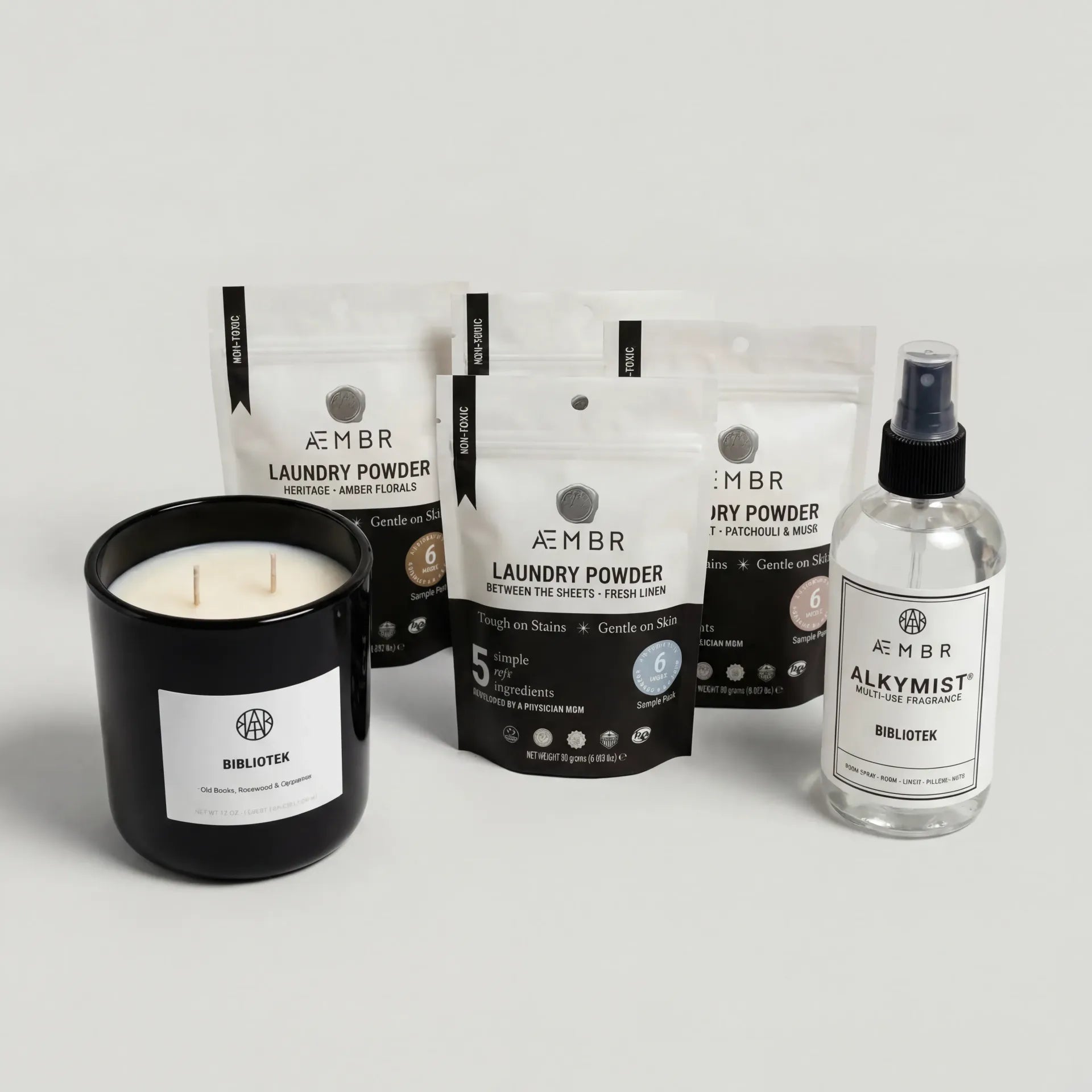
- Laundry detergents — including some marketed as "free & clear." Read the INCI list, not just the front-of-label claim. Our AEMBR Laundry Powder uses phthalate-free fragrance only in scented variants; the unscented formulation contains no fragrance of any kind.
- Dryer sheets and fabric softeners — heavy fragrance loads that transfer directly onto skin-contact fabric.
- Dish soap — your hands are in it repeatedly; a sensitizing compound at low concentration applied many times per day adds up.
- Cleaning sprays and disinfectants — including many marketed as "natural."
- Baby wipes and personal care products
- Paper products — some tissues and toilet paper contain fragrance.
- Candles and wax melts — though properly formulated candles from transparent brands are often a known, disclosed source rather than a hidden one.
- HVAC air fresheners — particularly in hotels, retail stores, and medical facilities.
How to Get a Proper Diagnosis
The gold standard for diagnosing allergic contact dermatitis to fragrance is patch testing, performed by a dermatologist or allergist. Patch testing exposes the skin to standardized concentrations of potential allergens — including fragrance mix I, fragrance mix II, Balsam of Peru, and individual IFRA allergens — over 48–96 hours. A positive reaction (localized redness and induration at the patch site) at the 96-hour reading indicates sensitization.
A skin prick test or IgE blood test may identify immediate-type (Type I) hypersensitivity but will not diagnose the more common delayed allergic contact dermatitis. If your reactions are delayed (appearing 24–72 hours after exposure), ask specifically for patch testing.
If formal patch testing isn't accessible to you, keeping a detailed exposure log — noting products used, environments entered, and symptoms — can help identify patterns and narrow the suspect ingredient pool before your appointment.
Managing a Fragrance Allergy: Practical Steps
Once sensitized, avoidance is the primary management strategy. There is no desensitization protocol for fragrance contact allergy the way there is for seasonal pollen. Practical steps include:
- Audit your laundry routine first. Laundry products are the longest-contact fragranced materials most people use — fabric against skin all day, and bedding against skin for eight hours a night. Switch to a genuinely fragrance-free laundry powder and wash existing fabrics at least twice to remove residue. The AEMBR Laundry Powder is formulated without optical brighteners or phthalates; the unscented variant contains no fragrance.
- Replace personal care products with verified fragrance-free options. Look for National Eczema Association Seal of Acceptance or EWG-verified products. Read the INCI list, not the front label.
- Communicate with your workplace and healthcare providers. Many healthcare facilities now have fragrance-free policies. Some workplaces will accommodate fragrance-free requests as an ADA-adjacent accommodation for employees with documented fragrance hypersensitivity.
- Be cautious with "natural" products. Essential oils are high-concentration aromatic compounds; many IFRA allergens occur naturally in lavender, clove, and citrus oils. Natural origin does not reduce sensitization risk.
- Manage your environment at home. If you enjoy home fragrance, choose transparent brands that disclose fragrance ingredients and work within IFRA guidelines. Our AEMBR candle collection uses phthalate-free fragrance oils in disclosed concentrations — and for someone managing a fragrance allergy, our unscented laundry line allows them to still participate in a clean home routine without the risk.
How AEMBR's Fragrance Philosophy Differs
I started AEMBR because I was frustrated with the opaqueness of fragrance in consumer products — as a physician, I wanted to know what I was exposing myself and my family to. Here's how we approach it:
- No phthalates — phthalate carriers are excluded from all AEMBR fragrance blends. Phthalates are not fragrance allergens per se, but they are endocrine disruptors that have their own safety concerns.
- IFRA compliance — all fragrance concentrations are formulated within IFRA guidelines, which set maximum use levels for known sensitizers based on product type and skin contact duration.
- Genuine unscented option — our laundry powder unscented variant contains zero fragrance compounds, masking or otherwise. If you have a fragrance allergy and want a clean laundry powder, this is formulated for you.
- Transparency about ingredients — we believe you should know what's in the products you bring into your home. That's not just marketing; it's a clinical value I brought from medicine.
For a deeper look at the specific chemicals we exclude — including the distinction between synthetic fragrance and phthalate-free fragrance — see our post on what fragrance chemicals actually are, and our earlier piece on what phthalate-free means on a product label.
The Physician's Checklist: Reducing Fragrance Allergy Risk
If you suspect fragrance allergy:
- ☐ Request patch testing from a dermatologist or allergist — ask specifically for fragrance mix I and II
- ☐ Switch laundry products to a verified fragrance-free formula first (longest skin-contact exposure)
- ☐ Read INCI lists, not front-label claims — "unscented" ≠ "fragrance-free"
- ☐ Audit fabric softeners and dryer sheets — replace with wool dryer balls
- ☐ Eliminate one suspected product category at a time and track symptoms over 2–4 weeks
- ☐ Be cautious with essential oil-based "natural" products — natural origin does not prevent sensitization
- ☐ If symptoms involve the respiratory system, discuss with your physician — overlapping asthma or rhinitis complicates management
- ☐ Keep an exposure log for your patch test appointment
When to See a Doctor
See a dermatologist or allergist if:
- You have a rash that persists beyond 72 hours, worsens with time, or appears in areas that weren't in direct contact with a fragrance source
- Your respiratory symptoms are worsening or interfering with sleep or daily function
- You've eliminated obvious fragrance sources and symptoms persist
- You have a history of asthma and notice fragrance consistently triggers exacerbations
Allergic contact dermatitis to fragrance is entirely manageable once you know what you're dealing with. The frustrating part is the detective work — identifying which compound, in which product, is the culprit. The clinical and formulation knowledge to do that well is not evenly distributed. That's part of why I write these posts.
Key Takeaways
- Fragrance allergy is most commonly a delayed (Type IV) contact dermatitis — reactions may appear 24–72 hours after exposure, not immediately
- "Unscented" does not mean fragrance-free; masking fragrances can still cause contact reactions
- IFRA allergens like cinnamal, linalool, limonene, and geraniol are present in both synthetic and natural fragrance sources
- Laundry products represent the highest-contact fragrance exposure for most people — address those first
- Patch testing is the gold standard for diagnosis; skin prick tests won't capture delayed contact reactions
- Avoidance, not desensitization, is the primary management strategy
- Transparent formulation — knowing what's in your products — is a clinical value, not just a marketing one
Kristina Braly, MD is the founder of AEMBR, a physician-founded clean fragrance and home care brand based in Houston, Texas. AEMBR products are formulated without phthalates, carcinogens, or synthetic dyes. Learn more at aembr.co.
This post is for educational purposes and does not constitute medical advice. If you suspect a fragrance allergy, consult a board-certified dermatologist or allergist.


