



By Kristina Braly, MD — Founder, AEMBR
Does laundry detergent expire? The short answer is yes — but not in the dramatic way food does. Detergents don't spoil into something harmful overnight. What they do is lose effectiveness over time, and depending on the formula and how you store it, that window can be surprisingly short. As someone who thinks a lot about ingredient integrity — both in the products I formulate and the ones my family uses — I want to give you a clear, practical breakdown of what's actually happening inside that bottle or box as it ages.

The Science Behind Detergent Degradation
Laundry detergents are complex chemical systems — surfactants, enzymes, builders, chelating agents, and in some products, fragrances and optical brighteners. Each component has its own stability window. Surfactants (the molecules that actually lift and suspend dirt) are relatively stable, but enzymes — protease, amylase, lipase — are biological molecules that denature over time, especially with heat and humidity exposure. Once enzymes break down, the detergent loses its ability to target protein stains (blood, sweat, grass) and fat-based stains effectively. The formula still does something, but not at the level you paid for.
Shelf Life by Detergent Type
| Detergent Type | Unopened Shelf Life | Opened Shelf Life | Primary Degradation Factor |
|---|---|---|---|
| Liquid detergent (conventional) | 12–18 months | 6–12 months | Enzyme degradation, fragrance oxidation |
| Powder detergent | 12–24 months | 6–12 months (humidity-dependent) | Clumping, moisture absorption |
| Detergent pods/pacs | 12–15 months | 6 months (seal integrity matters) | Outer film dissolving prematurely |
| Powder (enzyme-free, plant-based) | 24–36 months | 12–18 months | Moisture; stable surfactants |
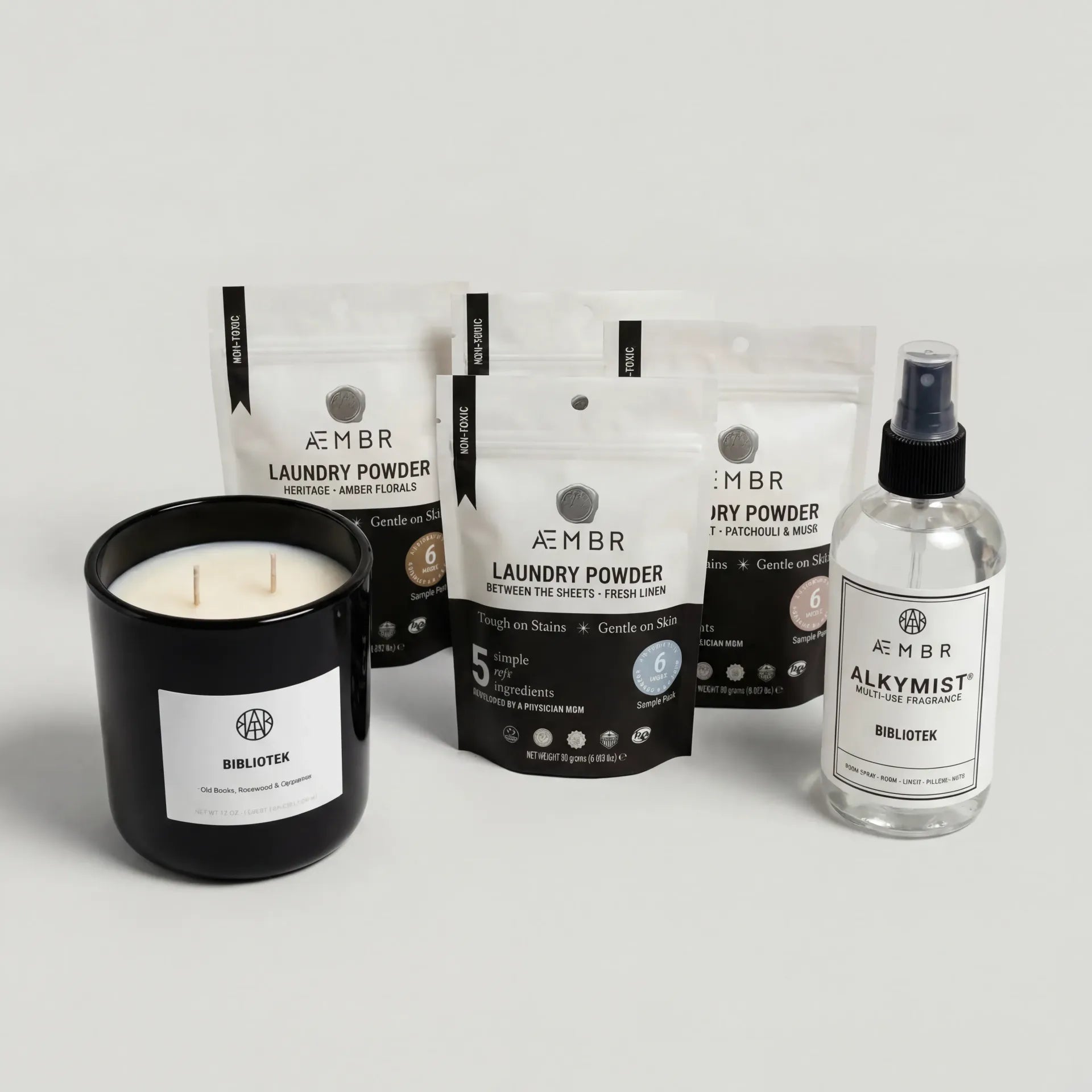
Powder detergents — particularly enzyme-free formulas like AEMBR Laundry Powder — have a meaningful shelf-life advantage. Without biological enzymes to destabilize, the formula stays potent far longer, especially in dry storage.
Does Unopened vs. Opened Make a Difference?
Significantly, yes. Once a package is opened, oxidation begins. Liquid detergents are especially vulnerable — exposure to air accelerates enzyme degradation and can cause fragrance compounds to break down into less pleasant (and sometimes more reactive) byproducts. Pods are sensitive once the resealable bag is compromised. Powder in a box holds up better if you reseal it tightly, but any humidity infiltration will start clumping and caking.
Unopened products are also protected from contamination. Dipping wet hands into a powder box or pouring liquid from a bottle that's been sitting open invites microbial growth in liquid formulas — though most conventional detergents contain preservatives to mitigate this.
Expert guidance on clean ingredients, home fragrance, and living well — from our physician-authored blog.
What "Expiration" Actually Looks Like
Most detergents don't have a printed expiration date — manufacturers are not legally required to include one for laundry products. What you may find is a "best by" or "use by" date, or nothing at all. So you're largely working with visual and performance cues:
- Liquid: Separation of layers, gel-like clumping at the bottom, unusual odor (rancid, sour, or flat)
- Powder: Hard clumps or a solid brick in the box; powder that won't dissolve in water; musty smell
- Pods: Film that looks partially dissolved, pods sticking together, or a tacky exterior
If your detergent smells off or looks wrong, trust that instinct. The formula has shifted.
Does Expired Detergent Harm Your Clothes or Machine?
Direct harm to fabric is rare. The bigger risk is underwashing — residual body oils, bacteria, and allergens that weren't fully removed because your detergent was underperforming. Over time, this can contribute to fabric odor that builds up rather than washes out. For washing machines, degraded surfactants can leave residue in the drum and seal. This is more of a maintenance nuisance than a catastrophe, but it's worth avoiding.
There's one exception worth noting for people with sensitive skin: degraded fragrance compounds in expired conventional detergents can become more allergenic. If you've been using the same bottle for over a year and noticing new skin reactions, the formula's age may be a factor. I cover this more in my post on laundry detergent ingredients.
How Storage Conditions Accelerate or Slow Aging
Temperature and humidity are the two biggest variables in your control. The ideal storage environment for any detergent is cool, dry, and out of direct sunlight — think a laundry room cabinet or pantry shelf, not a garage in Phoenix or a damp basement.
- Heat above 77°F (25°C): Accelerates enzyme breakdown in liquid formulas; can soften pod film
- Humidity above 60%: The enemy of powder detergents — moisture triggers clumping and can reduce solubility
- Direct sunlight: UV exposure degrades packaging and can accelerate oxidation of active ingredients
- Temperature fluctuations: Expansion and contraction cycles stress both packaging seals and emulsion stability in liquids
When to Toss It: A Practical Decision Tree
- ✅ Still good: Looks normal, smells clean, within 12 months of opening
- ⚠️ Use with caution: 12–18 months old, no visible changes — performance may be reduced; consider increasing dose slightly
- 🚫 Toss it: Clumped solid, separated liquid, off smell, pod film compromised, or over 2 years old regardless of appearance
Buying Strategy: Right-Sizing to Shelf Life
One of the most practical things I can tell you: buy what you'll use within 6–9 months. The "value" of a giant 200-load container disappears if the last 50 loads are washed with a formula that's lost 40% of its efficacy. This is especially true for enzyme-rich liquid detergents.
Powder detergents offer more flexibility here. A well-sealed, enzyme-free powder stored in a dry cabinet can remain effective for 18+ months after opening. If you do bulk-buy powder, transfer it into an airtight container — the original cardboard box is not airtight and will absorb ambient moisture over time.
Clean Formula Transparency and Stability
When I developed AEMBR Laundry Powder, shelf stability was a deliberate design choice. Enzyme-free formulas built on stable mineral and plant-based surfactants hold their potency longer than enzyme-dependent liquid alternatives — which matters both for sustainability (less waste from prematurely degraded product) and for predictable performance. You shouldn't need to guess whether your detergent is still working.
If you're evaluating formulas for long-term use, it's worth also reading my post on phthalate-free detergent options — ingredient choices upstream affect not just safety profiles but long-term formula stability.
What About Natural or "Clean" Detergents?
Plant-derived surfactants are generally as stable as their synthetic counterparts, and often more so. The instability in many "clean" products tends to come from added essential oils and botanical extracts — these can oxidize faster than synthetic fragrance fixatives. If you're using a clean detergent with essential oils for scent, treat it more like a 6–9 month product once opened, and store it carefully. AEMBR Laundry Powder uses no added fragrance at all, which removes this variable entirely.
Quick Reference: Shelf Life Summary
- Liquid detergent (conventional): 6–12 months open, 12–18 months sealed
- Powder detergent (with enzymes): 6–12 months open, 12–24 months sealed
- Pods/pacs: 6 months open, 12–15 months sealed
- Enzyme-free clean powder: 12–18 months open, 24–36 months sealed
- Always prioritize: cool, dry, dark storage
- No date on the label? Track your purchase date with a marker on the container
Bottom Line
Laundry detergent does expire — it just degrades gradually rather than spoiling suddenly. The practical takeaway: buy at a scale you'll use within a year, store in cool dry conditions, and pay attention to visual and sensory changes. If something looks or smells off, it's not going to clean your clothes properly. When formula integrity matters — for clean ingredients, predictable performance, and stable shelf life — start with AEMBR Laundry Powder.


