





By Kristina Braly, MD — Founder, AEMBR
When I started formulating AEMBR's cleaning products, I heard the same skepticism from almost everyone: sure, it's cleaner, but does it actually work? I understood the question. I'd asked it myself. I'd used enough watered-down "natural" products in the 2010s — the ones that foamed beautifully and did almost nothing — to know the skepticism was earned. So before I would put my name on anything, I had to answer this question honestly, as a physician and as a formulator: are clean cleaning products actually effective? Here's the unvarnished answer.

First, What Does "Clean" Actually Mean in Cleaning Products?
"Clean" is not a regulated term. The FDA doesn't define it for cleaning products; neither does the EPA. When a brand calls its formula "clean," it could mean anything from we removed two synthetic dyes to we reformulated the entire product from plant-derived raw materials and had every ingredient independently assessed for safety.
For me, "clean" has a specific operating definition: no phthalates, no carcinogens (including 1,4-dioxane, a byproduct of ethoxylation found in many SLS/SLES-based products), no optical brighteners, no synthetic fragrance with undisclosed hormone-disrupting compounds, and full ingredient transparency. That's the floor. The ceiling is using plant-derived functional ingredients wherever they perform as well as — or better than — their synthetic counterparts.
The honest answer to "is it effective?" depends entirely on whether the formulator did the chemistry right. Clean formulation is harder, not easier, than conventional. Here's why.
The Surfactant Problem (and How Good Formulators Solve It)
Surfactants are the workhorses of any cleaning product. They lower water's surface tension, lift soil from surfaces or fabric, and suspend it so it can be rinsed away. The most aggressive conventional surfactants — sodium lauryl sulfate (SLS), sodium laureth sulfate (SLES), and linear alkylbenzene sulfonates (LAS) — are effective precisely because they're harsh. They don't discriminate between what you want to remove and what you want to protect.
Expert guidance on clean ingredients, home fragrance, and living well — from our physician-authored blog.
Plant-derived surfactants — decyl glucoside, coco glucoside, lauryl glucoside, sodium coco sulfate — can match or exceed cleaning performance on most household soils while being significantly gentler. The key word is can. Performance depends on:
- Concentration: Under-dosed plant surfactants clean poorly. Formulators cutting costs produce the watery bottles that earned "natural cleaning products" a bad reputation.
- Combination: Most professional clean formulas use two to three surfactants in combination — an anionic (negatively charged) and a nonionic (uncharged) — to cover different soil types and optimize rinsability.
- pH: Surfactant performance is pH-dependent. A plant-based surfactant at the wrong pH cleans like water. At the right pH, it outperforms SLS on delicate fabrics and food-contact surfaces.
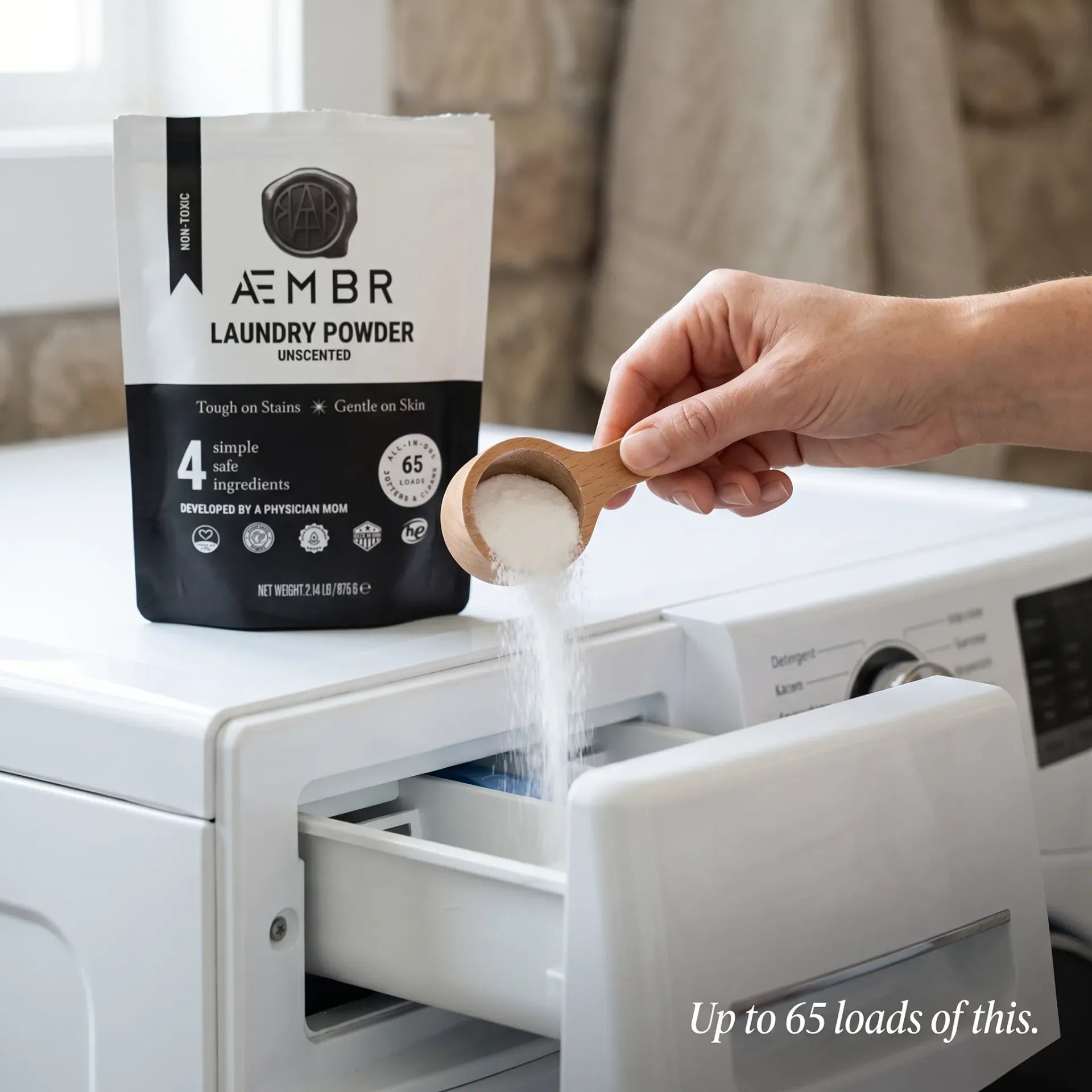
When I developed AEMBR Laundry Powder, I tested eleven surfactant combinations before landing on one that performed as well on our standard soil panels as conventional benchmarks. Eleven. That's the work that doesn't show up on the label.
What About Enzymes? This Is Where Clean Products Have a Real Advantage
Enzymatic cleaning is one area where well-formulated clean products genuinely outperform many conventional alternatives — and where the "clean products don't work" narrative breaks down hardest.
Enzymes are biological catalysts. In laundry and dish formulas, the most common are:
- Proteases: Break down protein-based stains — grass, blood, egg, dairy
- Amylases: Break down starch — pasta, rice, sauces
- Lipases: Break down fats and oils — cooking grease, sebum
- Cellulases: Break down cellulose fiber, reducing pilling and brightening cotton without optical brighteners
Enzymes work at lower temperatures (cold water) and lower concentrations than the chemical bleaching agents and phosphates they replace. They're also biodegradable. A well-dosed enzyme blend in a clean laundry powder will lift a three-day-old tomato sauce stain in cold water without any oxygen bleach — something many conventional powder formulas require hot water to accomplish.
The catch: enzymes are sensitive. They deactivate at high temperatures, degrade over time if poorly packaged, and require specific pH ranges to function. A cheap enzyme blend in a poorly stabilized formula is useless by the time it reaches the consumer. This is another place where low-quality "natural" formulas fail — not because enzymes don't work, but because the formulator didn't invest in the right quality or protective packaging.
Greenwashing: The Reason the Skepticism Is Earned
I want to be fair to the skeptics. The "clean products don't work" perception didn't come from nowhere. It came from a decade of products that used "natural" as a marketing claim with no formulation rigor behind it. Products that:
- Used plant-derived surfactants at a third of the necessary concentration to hit a price point
- Listed enzymes on the label but used inactive or degraded enzyme material
- Removed the ingredients that didn't work and removed the ingredients that did
- Replaced synthetic optical brighteners (which actually make laundry look brighter) with nothing — and then wondered why customers said their whites looked dull
Greenwashing is real. It's one of the reasons I believe physician-formulated and physician-verified claims matter: when a formulator has a medical training background, they're calibrated to the difference between a claim that's technically defensible and one that's functionally meaningful.
The EPA Safer Choice program is one of the more rigorous third-party frameworks for cleaning product ingredient assessment. Products carrying the Safer Choice mark have had each ingredient evaluated for human health and environmental safety. It doesn't guarantee performance — that's on the formulator — but it's a meaningful baseline for ingredient quality that rules out the worst greenwashing.
Performance Testing: What "Clinically Tested" Should Actually Mean
In my medical training, we learned a useful distinction: statistically significant vs. clinically meaningful. A treatment that reduces a biomarker by 0.1% is statistically significant at scale. Whether it changes your patient's outcome is a different question.
The same logic applies to cleaning product performance claims. "Removes 99.9% of bacteria" is a frequently cited statistic that refers to specific in-vitro test conditions, often at product concentrations far above real-world use, on specific bacterial strains, on non-porous surfaces. Whether that translates to your kitchen counter with normal dilution is a different question.
The performance testing I care about is:
- Real soil panels — actual food, grease, protein, and mineral soils, not dye surrogate tests
- Real-world dilution and temperature — cold water, standard dosing, typical laundry loads
- Consumer panel validation — does a user who isn't measuring with a spectrometer actually notice the difference
- Multi-wash persistence — does performance hold over 20 wash cycles, not just the first
Before we launched AEMBR Laundry Powder, I ran the formula through a third-party soil removal panel. It came back competitive with national conventional benchmarks on five out of six soil categories in cold water. That was the threshold I needed to answer — for myself — that this product earned the right to make the claims we make.
What Clean Products Genuinely Can't Match (and What That Means)
Honesty requires this section. There are specific applications where conventional chemistry outperforms clean alternatives, at least at current formulation technology:
- Disinfection: True EPA-registered disinfection (achieving a 6-log reduction in specific pathogens) requires either chlorine bleach, hydrogen peroxide at high concentrations, quaternary ammonium compounds, or a few other regulated active ingredients. Plant-derived formulas with mild alcohol or organic acids do not meet the EPA disinfection standard. For standard household cleaning, this almost never matters. For surfaces in a clinical or immunocompromised setting, it sometimes does.
- Heavily mineralized hard water deposits: Conventional products often use phosphonic acid chelators or citric acid at concentrations that clean formulas sometimes moderate. Heavy calcium or magnesium scale may require more product or a dedicated descaling agent.
- Heavily oxidized stains at cold temperatures: Oxygen bleach (sodium percarbonate) — which is clean and biodegradable — is still the right tool for certain stains. Including it isn't a compromise; it's a formulation decision. We include it in our Oxygen Boost for exactly that reason.
Knowing what your product does and doesn't do — and being transparent about it — is part of formulating honestly. Products that promise everything and qualify nothing are not to be trusted.
The Comparison Table: Clean vs. Conventional Across Key Performance Dimensions
| Performance Dimension | Well-Formulated Clean Product | Conventional Product | Notes |
|---|---|---|---|
| General soil removal (laundry) | ✅ Comparable | ✅ Comparable | Depends on enzyme quality and surfactant dose |
| Protein/grass stain removal | ✅ Strong (with protease) | ✅ Strong | Enzyme quality matters most |
| Cold water efficacy | ✅ Strong | ⚠️ Variable | Enzymes outperform chemical bleaches in cold water |
| Fabric/skin gentleness | ✅ Better | ⚠️ Variable | SLS/SLES more irritating; optical brighteners can cause photosensitivity |
| EPA disinfection claim | ❌ Not achievable (without active biocides) | ✅ Achievable (bleach/quats) | Rarely relevant for standard household use |
| Hard water scale removal | ⚠️ Good (citric acid) | ✅ Very good (phosphonates) | Heavy deposits may need repeat treatment |
| Indoor air quality impact | ✅ Lower VOC load | ⚠️ Higher (especially aerosols) | Relevant for respiratory health; see our VOC post |
| Fragrance safety | ✅ Phthalate-free, disclosed | ⚠️ Often undisclosed | "Fragrance" ingredient can contain 200+ compounds |
| Biodegradability | ✅ Better | ⚠️ Variable | Plant surfactants biodegrade faster than synthetic LAS |
What I Had to Prove to Myself Before I'd Sell It
I want to be direct about my own process, because I think it matters for how you evaluate any clean brand.
I tested our laundry formula on my own family's laundry for four months before I was willing to launch it. Four months of gym clothes, kid school clothes, bedsheets, and the inexplicable yellow mustard incident. I ran comparison loads against two conventional benchmarks and two "clean" competitors. I didn't declare success until I genuinely couldn't tell the difference — or until our formula outperformed — on the loads that mattered most to me as a user, not as a formulator.
That's the standard I'd encourage you to apply to any clean brand's claims: not the marketing language, but the actual evidence. Do they publish their ingredient list in full? Do they test their formula against real-world performance standards? Do they have a physician, chemist, or formulator with a credentialed background whose name is on the product?
If the answer to those three questions is yes, the product probably works. If the answer is "we use 97% natural ingredients" and a vague list of botanical extracts, the skepticism is warranted.
A Note on "Plant-Derived" vs. "Natural"
One more distinction worth making: "plant-derived" does not mean "found in nature unchanged." Many plant-derived surfactants are made through a chemical synthesis process that starts with a plant-based raw material (coconut oil, corn glucose) and transforms it into a functional cleaning molecule. The starting point is plant-based; the finished ingredient is the product of chemistry.
This is not a negative — it's how you get a surfactant that cleans effectively and biodegrades rapidly. But it means "plant-derived" and "natural" are different claims. I use "plant-derived" deliberately because it's accurate. "Natural" implies something about the ingredient's origin and transformation that is rarely technically correct for any functional cleaning ingredient.
The framework I use: is the starting material plant-based or petroleum-based? Is the synthesis process clean? Is the end ingredient assessed for safety? That's the question I actually care about — not whether I could find the raw molecule growing in a forest.
The Bottom Line: Clean Products Work — If They're Made Correctly
"Are clean cleaning products actually better?" The honest answer is: the well-formulated ones are. They clean as well as conventional products on most household applications, they're gentler on skin and fabrics, they carry a lower VOC and fragrance-risk burden, and they biodegrade faster. In the specific areas where they fall short — EPA-registered disinfection, certain hard-water applications — that gap is rarely relevant to standard household use.
What distinguishes a well-formulated clean product from a greenwashed one is the rigor behind it: proper surfactant concentration and combination, quality enzyme sourcing, correct pH, real-world performance testing, and a formulator whose credentials are attached to the claims.
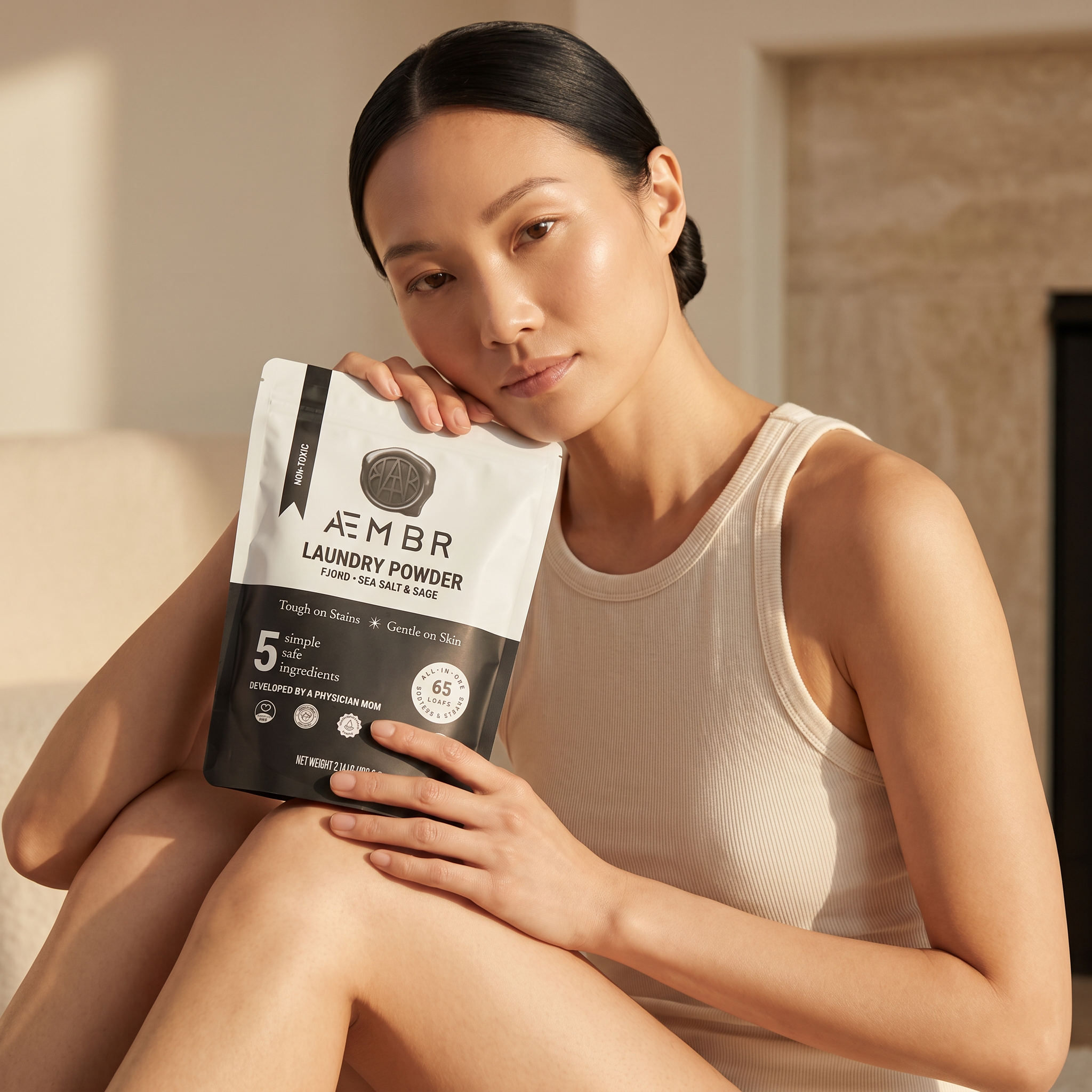
That's why the physician-founder model matters to me — not as a marketing device, but because my training gave me a framework for evaluating evidence, not just accepting claims. Everything I put under the AEMBR name has been through that framework.
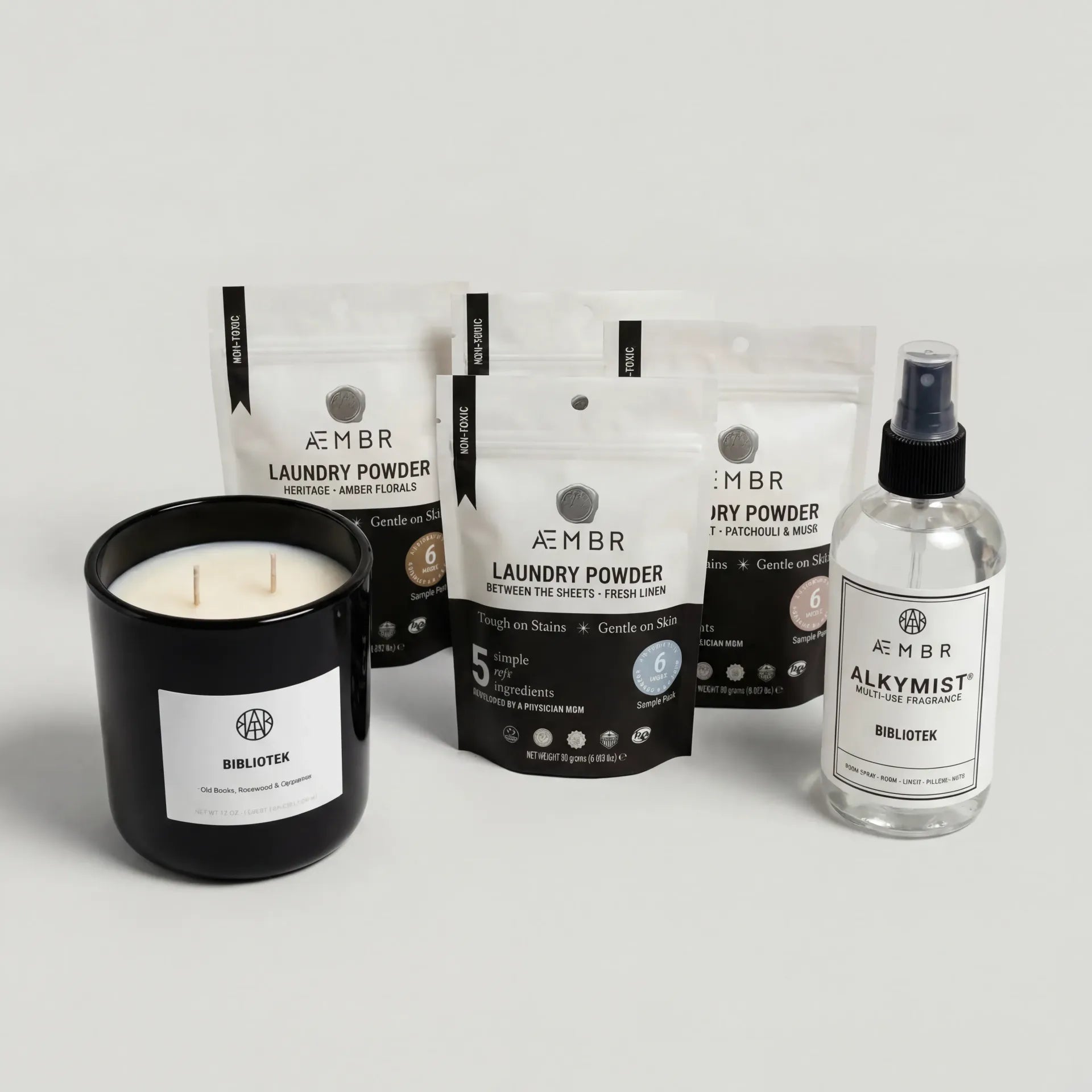
If you want to see what that looks like in practice, the AEMBR Laundry Powder is a good place to start — or explore the full Non-Toxic Household Collection.
Summary Checklist: How to Evaluate a "Clean" Cleaning Product
- ☑ Full ingredient list published — not just "key ingredients"
- ☑ Surfactant type and approximate concentration disclosed or inferable
- ☑ Enzyme blend specified (not just "enzymes" as a catch-all)
- ☑ Fragrance disclosed as phthalate-free and IFRA-compliant, or fragrance-free
- ☑ No optical brighteners (if you're sensitive to skin contact)
- ☑ No 1,4-dioxane risk (check for PEG compounds or ethoxylated surfactants)
- ☑ Third-party certification or performance testing disclosed
- ☑ Formulator or physician credential attached — not just a brand story
- ☑ Realistic performance claims — no product "removes 100% of all stains"


