





By Kristina Braly, MD — Founder, AEMBR
Essential oils are everywhere in the natural cleaning world. Tea tree. Lavender. Eucalyptus. Brands market them as powerful antimicrobial agents — safer alternatives to the synthetic chemicals in conventional cleaners. That claim is sometimes partially true, sometimes completely wrong, and often missing critical context. As a physician who formulates home fragrance and laundry products, I've spent a lot of time parsing the literature on essential oils and cleaning — and the picture is more complicated than any bottle label will tell you.
The core question isn't just "are essential oils safe for cleaning surfaces" — it's whether they actually do what their proponents claim, at what concentrations, on what surfaces, and around whom. This post walks through what the evidence actually shows.
What Essential Oils Are (and What They Aren't)
Essential oils are volatile aromatic compounds extracted from plants — typically via steam distillation or cold pressing. They're complex chemical mixtures, often containing dozens of individual compounds. Tea tree oil, for example, contains primarily terpinen-4-ol, along with gamma-terpinene, alpha-terpinene, 1,8-cineole, and around 100 other identified components depending on the source plant and extraction method.
That complexity matters. When a study says "tea tree oil has antimicrobial activity," it's referring to the whole oil — and the activity varies with concentration, contact time, pH, surface type, and what organism you're testing it against. "Antimicrobial" on a lab bench at a 10% concentration in a controlled medium does not automatically translate to "disinfects your kitchen counter."
Essential oils are not EPA-registered disinfectants. That distinction is important — and I'll come back to it.
Expert guidance on clean ingredients, home fragrance, and living well — from our physician-authored blog.
Which Essential Oils Have Real Antimicrobial Data
To be direct: a handful of essential oils do have credible, peer-reviewed evidence for antimicrobial activity. The caveats matter, but the data is there.
Tea tree oil (Melaleuca alternifolia) is the most studied. Multiple in vitro studies confirm activity against Staphylococcus aureus (including MRSA), E. coli, Candida albicans, and several other pathogens. The mechanism appears to involve membrane disruption from terpinen-4-ol. Effective concentrations in studies typically range from 0.25% to 2% — concentrations that require intentional formulation, not a few drops added to water.
Thyme oil (thymol) has strong antimicrobial evidence and is actually used as the active ingredient in EPA-registered products like Seventh Generation Disinfecting Spray. When thymol appears on an EPA-registered product's ingredient list, it means it passed efficacy testing at the concentration used in that product. That's a meaningful distinction.
Oregano oil (carvacrol) has good in vitro data, particularly against Gram-positive bacteria. It's less frequently used in cleaning formulations because of its intensity and cost.
Eucalyptus oil has some antimicrobial data, primarily against respiratory pathogens in diffusion studies, and modest surface activity. It is not among the strongest performers in head-to-head comparisons with tea tree or thymol.
Lavender has very limited antimicrobial evidence at typical use concentrations. It smells clean. That's not the same as being antimicrobial. Lavender is primarily a fragrance ingredient — which isn't a problem, but marketing it as a sanitizing agent is misleading.
What "Antimicrobial" Means vs. What "Disinfectant" Means
This is where a lot of essential oil cleaning claims go wrong. In scientific literature, "antimicrobial activity" means a substance shows inhibitory effects on microbial growth under controlled conditions. It does not mean the product is a regulated disinfectant.
In the United States, products marketed as disinfectants must be registered with the EPA under FIFRA (Federal Insecticide, Fungicide, and Rodenticide Act). EPA registration requires efficacy testing against specific target organisms (like SARS-CoV-2, Salmonella, or influenza) at the concentration used in the final product. The product must achieve the required log reduction within a defined contact time on real-world surfaces.
No essential oil cleaning blend you're mixing at home has been through EPA efficacy testing. Neither have most products marketed as "natural cleaners with essential oils." There are a small number of exceptions — products containing thymol or citric acid as EPA-registered active ingredients — but they're the outliers. Most essential oil cleaners are doing the work of a soap (surfactant-based physical removal of soil and microbes), not a registered disinfectant.
If you want to understand when you actually need a disinfectant vs. when cleaning is enough, I covered that in depth in my post on the difference between cleaning, disinfecting, and sanitizing. The short answer: most of the time, cleaning is enough. Which means essential oil cleaners may be perfectly adequate for everyday surfaces — just not for situations where you genuinely need pathogen reduction.
Dilution Ratios: Where the Math Often Goes Wrong
Most DIY essential oil cleaner recipes recommend 10–20 drops of tea tree oil per spray bottle of water (typically 16–32 oz). At those quantities, you're working at roughly 0.01–0.05% concentration by volume. The antimicrobial studies showing real activity use concentrations of 0.25–2%. That's a 5- to 200-fold difference.
At typical DIY dilutions, you are primarily getting fragrance, a mild mood effect (if you're aromatherapy-inclined), and the physical cleaning action of whatever else is in your spray — usually water, sometimes a small amount of dish soap or vinegar.
This doesn't make the cleaner dangerous. It makes the antimicrobial marketing claim inaccurate. If your goal is a pleasant-smelling surface cleaner that removes dirt and grease, essential oils can contribute to that. If your goal is killing pathogens, you need to either use an EPA-registered product or verify that your formulation has been efficacy-tested at its actual use concentration.
Surface Compatibility: What to Avoid
Essential oils are lipophilic — they dissolve in fats and oils, not water. In spray solutions, they don't homogenize well without an emulsifier (hence why DIY sprays often require shaking before use). On some surfaces, undiluted or high-concentration essential oils can cause problems:
- Natural stone (granite, marble, quartz): Many essential oils are acidic or can interact with stone sealants. Citrus-based oils are particularly problematic. A properly diluted spray is generally fine, but undiluted application can etch or dull finishes over time.
- Finished wood: High concentrations can affect lacquer and polyurethane finishes. A small amount in a diluted spray is typically safe.
- Plastics: Some essential oil compounds (particularly citrus terpenes like d-limonene) can degrade certain plastics over repeated exposure.
- Painted surfaces: Prolonged essential oil contact can affect paint adhesion on some finishes.
For general countertops, tile, glass, and sealed surfaces — properly diluted essential oil blends are compatible. The key word is "properly diluted."
Essential Oil Safety Around Pets
This is where I want to be unambiguous: some essential oils are genuinely toxic to certain animals, particularly cats.
Cats lack the hepatic enzyme glucuronyl transferase, which metabolizes many phenolic compounds found in essential oils. This makes them unable to safely process several common oils, including:
- Tea tree oil — even small amounts can cause tremors, ataxia, and liver damage in cats
- Eucalyptus — salivation, lethargy, depression, ataxia
- Pennyroyal, clove, cinnamon, thyme, oregano — varying degrees of hepatotoxicity
- Citrus oils — skin sensitizers and GI irritants for cats
If you have cats, this applies to both diffused essential oils and surface cleaners. Cats groom by licking their paws, which means surface residue exposure is a real route — not just airborne inhalation. A diluted spray that dries completely on an out-of-reach surface is lower risk; a diffuser running continuously in an enclosed room where a cat sleeps is higher risk.
Dogs are less sensitive than cats but can still be affected by concentrated or continuous exposure, particularly to tea tree oil, pennyroyal, and clove. Essential oils are generally safer for dogs at typical household cleaning concentrations, but "safer" doesn't mean zero risk for high-exposure scenarios.
The practical guidance: if you have cats, tea tree oil in any cleaning product is not worth the risk. A well-formulated surfactant-based cleaner — without the antimicrobial oil marketing — does the cleaning job without the hepatotoxicity risk.
Skin and Respiratory Safety for Humans
Essential oils are among the most common causes of contact sensitization in cleaning and personal care products. The IFRA (International Fragrance Research Association) maintains limits on specific compounds — cinnamal, eugenol, limonene, linalool, geraniol — because repeated low-level exposure can create sensitization over time. Once you're sensitized, even very small amounts trigger a reaction.
Respiratory exposure is relevant for diffused oils and spray applications. At typical cleaning spray concentrations, the exposure is brief and at low levels — generally below occupational exposure limits for the identified compounds. Extended use in unventilated spaces or high-volume diffusion is a different scenario.
The takeaway for cleaning use: properly diluted, in a ventilated space, with reasonable contact time — essential oil cleaners present low human health risk for most adults. People with asthma, fragrance sensitivity, or known essential oil allergies should be more cautious.
The Fragrance vs. Function Distinction in Formulation
This is something I think about constantly as a formulator: essential oils serve two different functions in cleaning products, and conflating them creates confusion.
Functional use: a meaningful concentration of an antimicrobially active oil (e.g., thymol at >0.1%) included because of its efficacy, ideally with efficacy testing to support the claim.
Fragrance use: a small amount of an essential oil included because it smells good and evokes cleanliness — pine, citrus, lavender, eucalyptus. This is honest and fine. The problem arises when fragrance-level additions are marketed as the product's disinfecting mechanism.
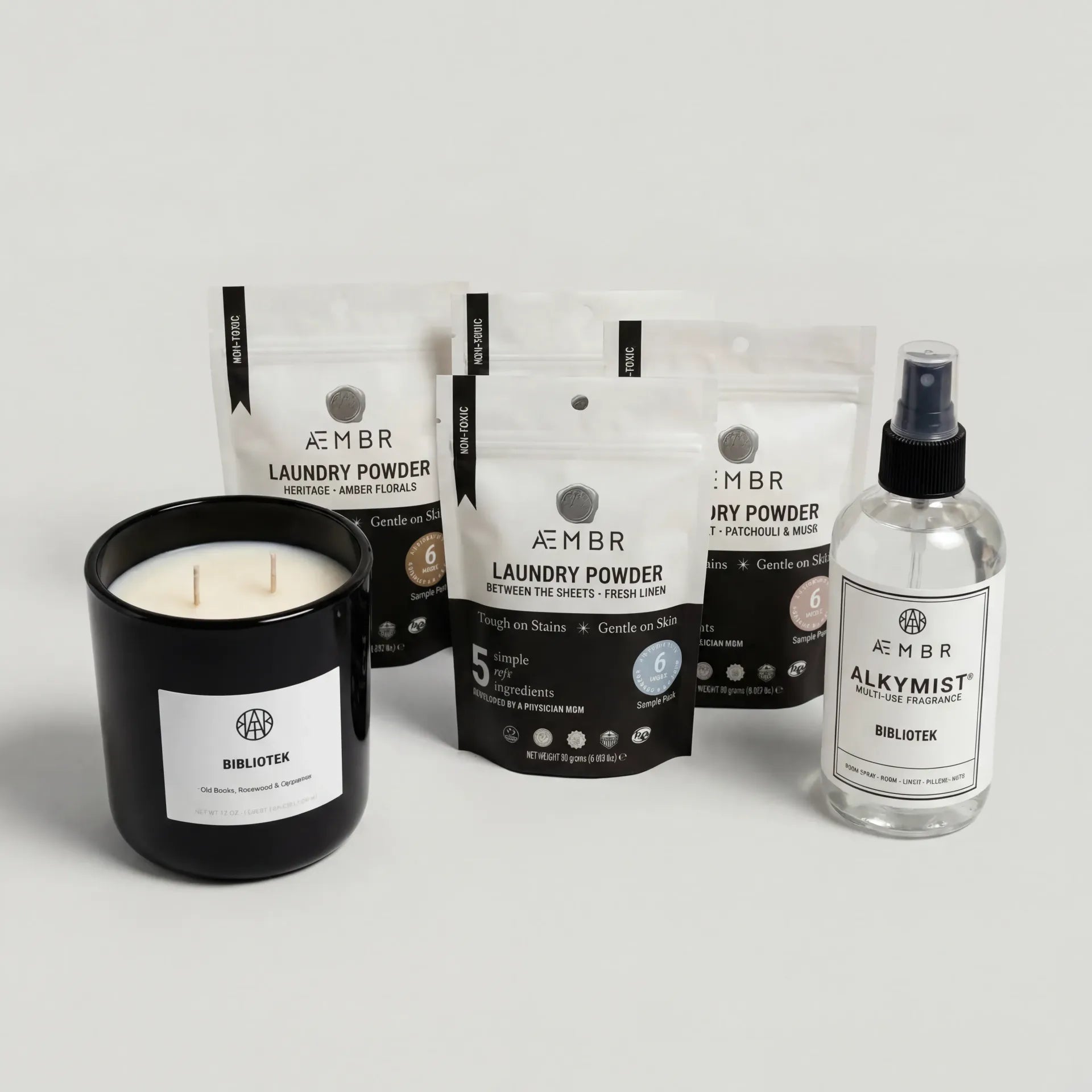
At AEMBR, our home fragrance products — like the ALKYMIST Room Spray — contain carefully selected fragrance compounds used for their sensory quality, not marketed as cleaners or disinfectants. The ingredient transparency is intentional: you should know what you're breathing and why it's in there. A room spray that smells like eucalyptus is not an antimicrobial surface treatment, and I'd rather say that plainly than have a label imply otherwise.
A Comparison: Essential Oil Cleaners vs. Alternatives
| Cleaner Type | Antimicrobial Evidence | EPA Registered | Pet Safety Concern | Surface Compatibility |
|---|---|---|---|---|
| DIY tea tree spray (typical dilution) | Weak at typical DIY concentrations | No | High (cats) | Most sealed surfaces |
| Thymol-based cleaner (EPA registered) | Strong — tested at use concentration | Yes | Low at use concentration | Most hard surfaces |
| Lavender-based cleaner | Minimal at any realistic concentration | No | Low | Most surfaces |
| Surfactant-based cleaner (no antimicrobial claim) | Physical removal via surfactant — appropriate for most daily cleaning | N/A (not a disinfectant) | Low | Broad — formulation-dependent |
| EPA-registered quaternary ammonium disinfectant | Strong against broad pathogen spectrum | Yes | Moderate — reproductive toxicity concerns at repeated exposure | Most hard surfaces |
What I Actually Recommend
If you want to use essential oils in your cleaning routine, here's how I'd frame it:
- For daily surface cleaning (countertops, sinks, table surfaces) — a properly diluted tea tree or thymol-based spray in a surfactant base is reasonable. You're cleaning, not disinfecting. That's appropriate most of the time.
- For high-stakes disinfection (after handling raw meat, when someone in the house has a GI illness, immune-compromised household members) — use an EPA-registered disinfectant. This is not the place for essential oil cleaners, regardless of what the label implies.
- If you have cats — skip tea tree entirely. A surfactant-based cleaner or thymol-based product (which cats tolerate better at cleaning concentrations) is a safer choice.
- For fragrance — own that use case. A cleaner that smells like lavender is pleasant. That's a valid reason to use it. Just don't expect it to be doing antimicrobial work.
Red Flags to Watch on Labels
When you're shopping for essential oil-based cleaners, these label claims should prompt closer scrutiny:
- "Kills 99.9% of bacteria" without EPA registration number — this is an illegal claim on an unregistered product
- "Natural disinfectant" with no EPA registration — "natural" doesn't confer disinfectant status
- Antimicrobial claims without any listed active ingredient at a specified concentration
- "Just as effective as bleach" — this requires efficacy data at the same log-reduction standard; without a study, it's marketing
Legitimate products with essential oil-derived active ingredients will have an EPA registration number on the label and a clearly listed active ingredient with percentage (e.g., "Thymol 0.05%").
Summary Checklist: Using Essential Oils for Cleaning Safely
- ✅ Use tea tree, thymol, or eucalyptus at formulated concentrations (0.1–1%+) for meaningful antimicrobial benefit — not just a few drops in water
- ✅ Verify EPA registration if you need an actual disinfectant
- ✅ Avoid tea tree and eucalyptus around cats — the hepatotoxicity risk is real and well-documented
- ✅ Use citrus and lavender oils for fragrance — don't expect antimicrobial function at typical cleaning concentrations
- ✅ Shake DIY essential oil sprays before use — they don't emulsify in water without a surfactant or emulsifier
- ✅ Ventilate when using spray cleaners of any kind — essential oil or synthetic
- ✅ Know the difference between cleaning (physical removal) and disinfecting (pathogen kill) — and match the tool to the actual need
- ✅ Read labels: if a product claims to disinfect without an EPA registration number, treat that claim skeptically
Essential oils aren't useless for cleaning — but they're not magic, either. The evidence supports some of them, at the right concentrations, for the right use cases. The marketing often claims much more than the science supports. As with most things in clean product formulation: specificity beats enthusiasm, and data beats anecdote.
For more on understanding cleaning and disinfection claims, see my post on the difference between cleaning, disinfecting, and sanitizing.


