





By Kristina Braly, MD — Founder, AEMBR
As a physician, I was trained to read labels critically — whether it's a medication insert or a food package. When I turned that same lens on conventional laundry detergent ingredients, I was genuinely surprised by what I found. Most of us assume that a product sold in grocery stores is well-tested and safe. But laundry detergent is largely unregulated when it comes to ingredient disclosure, and many of the compounds that do show up on labels — and many that don't — carry real safety questions backed by peer-reviewed research.

This isn't a scare piece. My goal is the same as it's always been in medicine: give you accurate, evidence-grounded information so you can make informed decisions. In this post, I'm going to walk through the major ingredient classes in conventional laundry detergent, explain what they actually do, and share what the safety literature says. By the end, you'll know exactly what you're washing your family's clothes in — and whether that's something you're comfortable with.
Why Laundry Detergent Ingredients Matter More Than You Think
Clothing sits against your skin for 12–16 hours a day. Whatever residue remains in the fabric after washing — surfactants, fragrance compounds, optical brightening agents — is in continuous contact with your largest organ. Unlike rinsing your hands after washing dishes, you can't fully wash detergent off your body once it's absorbed into the fabric weave. Dermal absorption of low-level chemical residues over years of daily exposure is not a theoretical concern. It's a legitimate one, and it's why formulation decisions in laundry products matter in a way that, say, dish soap formulation matters somewhat less.
The other piece that often gets overlooked: conventional detergents are rinse-off products, meaning they're designed to wash away. But "rinse-off" doesn't mean "leaves no trace." Studies measuring residual surfactant and fragrance compound levels in laundered fabrics consistently find measurable amounts post-wash. The degree of residue depends on water temperature, machine efficiency, and the specific compounds — but zero residue is rarely the result.
Surfactants: The Cleaning Workhorse (and Where Things Get Complicated)
Surfactants — short for surface-active agents — are the primary cleaning ingredient in any detergent. They work by reducing surface tension between water and oil, allowing grease, sweat, and dirt to be lifted from fabric and suspended in the wash water. Without surfactants, detergent would just be scented water.
Expert guidance on clean ingredients, home fragrance, and living well — from our physician-authored blog.
The question isn't whether surfactants are necessary. They are. The question is which surfactants are used, at what concentration, and how they interact with skin and the environment.
The two most common surfactant families in conventional detergents are sodium lauryl sulfate (SLS) and sodium laureth sulfate (SLES). Both are highly effective cleaners. Both are also associated with skin irritation, particularly in people with eczema, atopic dermatitis, or compromised skin barriers. SLS in particular disrupts the skin barrier's natural lipid structure — a mechanism that's well-documented in dermatological literature and is the reason it's used as a positive control in skin sensitization studies. Researchers deliberately use SLS to induce irritation. That context is worth knowing.
SLES is sometimes marketed as a milder alternative because it's ethoxylated — a chemical process that reduces irritation potential. However, ethoxylation introduces a different concern: the potential for contamination with 1,4-dioxane, which I'll cover in its own section below.
Plant-derived surfactants — derived from coconut, corn, or sugar — offer effective cleaning with a more favorable skin safety and environmental profile. Compounds like sodium coco sulfate, decyl glucoside, and caprylyl/capryl glucoside are increasingly used in cleaner formulations and are generally better tolerated by sensitive skin.
| Surfactant Type | Source | Cleaning Power | Skin Irritation Risk | Environmental Concern | Other Notes |
|---|---|---|---|---|---|
| SLS (Sodium Lauryl Sulfate) | Petrochemical or palm-derived | High | High — known barrier disruptor | Moderate — biodegrades but slowly | Used as irritation positive control in research |
| SLES (Sodium Laureth Sulfate) | Petrochemical or palm-derived | High | Moderate — milder than SLS | Moderate | Ethoxylation may introduce 1,4-dioxane contamination |
| Sodium Coco Sulfate | Coconut oil | High | Low–Moderate | Lower — biodegrades more readily | Broader fatty acid chain mix than SLS |
| Decyl Glucoside | Coconut + corn glucose | Moderate | Low — generally well tolerated | Low — readily biodegradable | Common in baby and sensitive-skin formulas |
| Caprylyl/Capryl Glucoside | Coconut + sugar | Moderate | Very low | Low — readily biodegradable | Mild enough for clinical skin care applications |
Enzymes: Mostly Good News, With One Caveat
Enzymes are biological catalysts added to detergents to break down specific types of stains. Proteases break down protein-based stains (blood, sweat, dairy). Amylases target starches. Lipases break down fats and oils. Mannanases and cellulases help with plant-based stains and fabric softening, respectively.
From a safety standpoint, enzymes in laundry detergent are generally considered low-risk for consumers. They are proteins, and they're typically inactivated during the wash cycle and rinsed away. The more documented concern with detergent enzymes is occupational — workers in detergent manufacturing facilities who inhale enzyme dust have shown rates of occupational asthma. For consumers using finished products, this exposure pathway is minimal.
Where enzymes do occasionally cause concern is in individuals with severe protein allergies or highly reactive skin — the residual enzyme activity on fabric may cause irritation in these cases. But for the general population, enzymes are one of the more defensible ingredient classes in modern detergent.
Optical Brighteners: Making Clothes Look Clean Without Actually Being Cleaner
Optical brightening agents (OBAs) — also called fluorescent whitening agents (FWAs) — are chemical compounds that absorb UV light and re-emit it as visible blue light, making white and light-colored fabrics appear brighter and whiter. They don't actually clean anything. They're a perceptual trick.
OBAs are designed to deposit on fabric and remain there after washing. They are intentionally substantive — meaning they bind to textile fibers and don't fully rinse out. This is, by design, a leave-on ingredient in a product marketed as a rinse-off product.
The safety literature on OBAs has some nuance. Certain stilbene-based OBAs (common in conventional detergents) have demonstrated skin sensitization potential in patch test studies. The European Commission's Scientific Committee on Consumer Safety (SCCS) has previously flagged specific OBA compounds for skin sensitization concerns. Photoallergic reactions — where the compound becomes allergenic after UV light exposure — have also been documented.
Beyond skin, OBAs are poorly biodegradable and have demonstrated aquatic toxicity in fish and invertebrate studies. For a compound that persists in fabric, in wastewater, and potentially on skin — and provides no cleaning benefit — the risk-to-value ratio doesn't hold up for me.
Synthetic Fragrance: The Ingredient That Hides Everything
This is the ingredient class I feel most strongly about, and where the regulatory gap is most stark. In the United States, the word "fragrance" on a product label can legally represent a blend of hundreds of individual chemical compounds. The FDA does not require these compounds to be individually disclosed because fragrance formulas are considered trade secrets.
The fragrance industry maintains a voluntary self-regulatory body — the International Fragrance Association (IFRA) — that publishes usage standards. But IFRA standards are industry-set, not government-enforced, and they don't address long-term cumulative exposure across all the products a person uses daily.
Within "fragrance" blends, two categories of compounds warrant particular attention:
- Phthalates: Used as fragrance fixatives and plasticizers. Associated with endocrine disruption and reproductive toxicity. DEHP and DBP are classified as reproductive toxicants in the EU and are banned from cosmetics there — but not from laundry products in the US. I cover this in depth in the next post in this series on phthalate free laundry detergent.
- Synthetic musks: Nitromusks and polycyclic musks (like galaxolide and tonalide) are used for long-lasting scent. Both accumulate in human tissue — they've been detected in breast milk, umbilical cord blood, and adipose tissue. Nitromusks are suspected carcinogens and are largely banned, but polycyclic musks remain in widespread use.
The compounding problem: a person who uses a conventional laundry detergent, dryer sheets, fabric softener, body lotion, shampoo, and perfume is receiving fragrance-compound exposure from every direction, simultaneously. Regulators don't assess cumulative load across products. The individual-product safety assessment that does exist — and it's minimal — doesn't account for that reality.
1,4-Dioxane: The Contaminant You Won't Find on the Label
1,4-Dioxane is a byproduct of the ethoxylation process used to produce SLES and certain other surfactants and emulsifiers. It is classified as a probable human carcinogen by the EPA. It is not added intentionally to detergents — it's a manufacturing byproduct — which is exactly why it won't appear on any ingredient label. You can't see it listed because it's not technically an ingredient. It's a contaminant.
Testing by the Environmental Working Group and investigative reporting by the New York State Department of Environmental Conservation has found 1,4-dioxane in a significant number of conventional laundry detergents on the US market. Concentrations vary, but the compound's presence in commonly used household products is not hypothetical.
The good news: 1,4-dioxane can be removed during manufacturing through vacuum stripping. Some manufacturers do this. Many don't — or don't test for residual levels. Without third-party testing or manufacturing transparency, there's no way for a consumer to know which category their detergent falls into based on the label alone.
Choosing formulations that use plant-derived surfactants not produced via ethoxylation largely sidesteps this contamination pathway.
Phosphates and Builders: A Water Chemistry Problem
Detergent builders are compounds that enhance surfactant effectiveness by softening water (binding calcium and magnesium ions that would otherwise interfere with cleaning). Phosphates were the classic builder for decades — highly effective, cheap, and extremely problematic for aquatic ecosystems. Phosphate discharge from laundry and dishwasher detergents contributed significantly to eutrophication of lakes and waterways — algal overgrowth that depletes oxygen and kills aquatic life.
Phosphates are now banned or restricted in laundry detergents in most US states and in the EU. Most conventional detergents use zeolites, citrates, or polycarboxylates as replacement builders. Citrate (citric acid salt) is among the more environmentally favorable options. Polycarboxylates are synthetic and vary in biodegradability.
If you're using an older product or a commercial-formula detergent, it's worth checking whether phosphates appear on the label — some commercial and industrial products still use them.
Preservatives: Necessary, but Not All Equal
Liquid detergents contain water, which creates a microbial growth environment. Preservatives are necessary to maintain product stability and prevent contamination. The question, again, is which preservatives and at what concentrations.
Methylisothiazolinone (MIT) and methylchloroisothiazolinone (CMIT) are among the most common preservative systems in liquid laundry products. Both are potent allergens — MIT in particular was named Contact Allergen of the Year by the American Contact Dermatitis Society. The EU has banned leave-on cosmetics from containing MIT above a very low threshold. In rinse-off products (including detergent), it remains permitted, though at reduced concentrations following regulatory review.
Formaldehyde-releasing preservatives (such as DMDM hydantoin and quaternium-15) are used in some detergents. These compounds release small amounts of formaldehyde over time — a Group 1 carcinogen per the International Agency for Research on Cancer (IARC). The concentrations in finished products are low, but the bioethics of intentionally including formaldehyde-releasers in a product applied to children's clothing is a question I find hard to dismiss.
More favorable alternatives include ethanol, sodium benzoate at appropriate pH, and certain naturally-derived antimicrobial compounds. Powder detergents have a natural advantage here: without water, the preservative burden is significantly reduced or eliminated.
Dyes and Colorants: No Function, Some Risk
Many conventional detergents are brightly colored — blue, green, orange — for marketing reasons. The dye adds nothing to cleaning performance. Synthetic dyes, particularly azo dyes, have known contact dermatitis potential. Certain azo dyes are also environmental contaminants. There is simply no reason these belong in a laundry product, and their presence is a formulation red flag for me — it signals that aesthetics were prioritized over skin safety in the formulation decision.
Laundry Detergent Ingredients to Avoid: Your Checklist
- ☐ SLS / Sodium Lauryl Sulfate — known skin barrier disruptor; used as irritation standard in research
- ☐ SLES / Sodium Laureth Sulfate — potential 1,4-dioxane contamination from ethoxylation process
- ☐ "Fragrance" or "Parfum" — undisclosed blend that may contain phthalates, synthetic musks, and other unvetted compounds
- ☐ Optical brighteners / Fluorescent whitening agents — leave-on compounds with skin sensitization and poor biodegradability
- ☐ Methylisothiazolinone (MIT) / CMIT — potent allergens; EU restricted
- ☐ Formaldehyde-releasing preservatives (DMDM hydantoin, quaternium-15, imidazolidinyl urea) — release formaldehyde, a Group 1 carcinogen
- ☐ Synthetic dyes — no functional benefit; contact allergen risk
- ☐ Phosphates — largely phased out but still appear in some commercial formulas
- ☐ Polycyclic musks (galaxolide, tonalide) — bioaccumulate in human tissue
- ☐ Phthalates (may not be listed; check if "fragrance" is on the label without further disclosure) — endocrine disruptors
What I Look for in a Clean Laundry Detergent
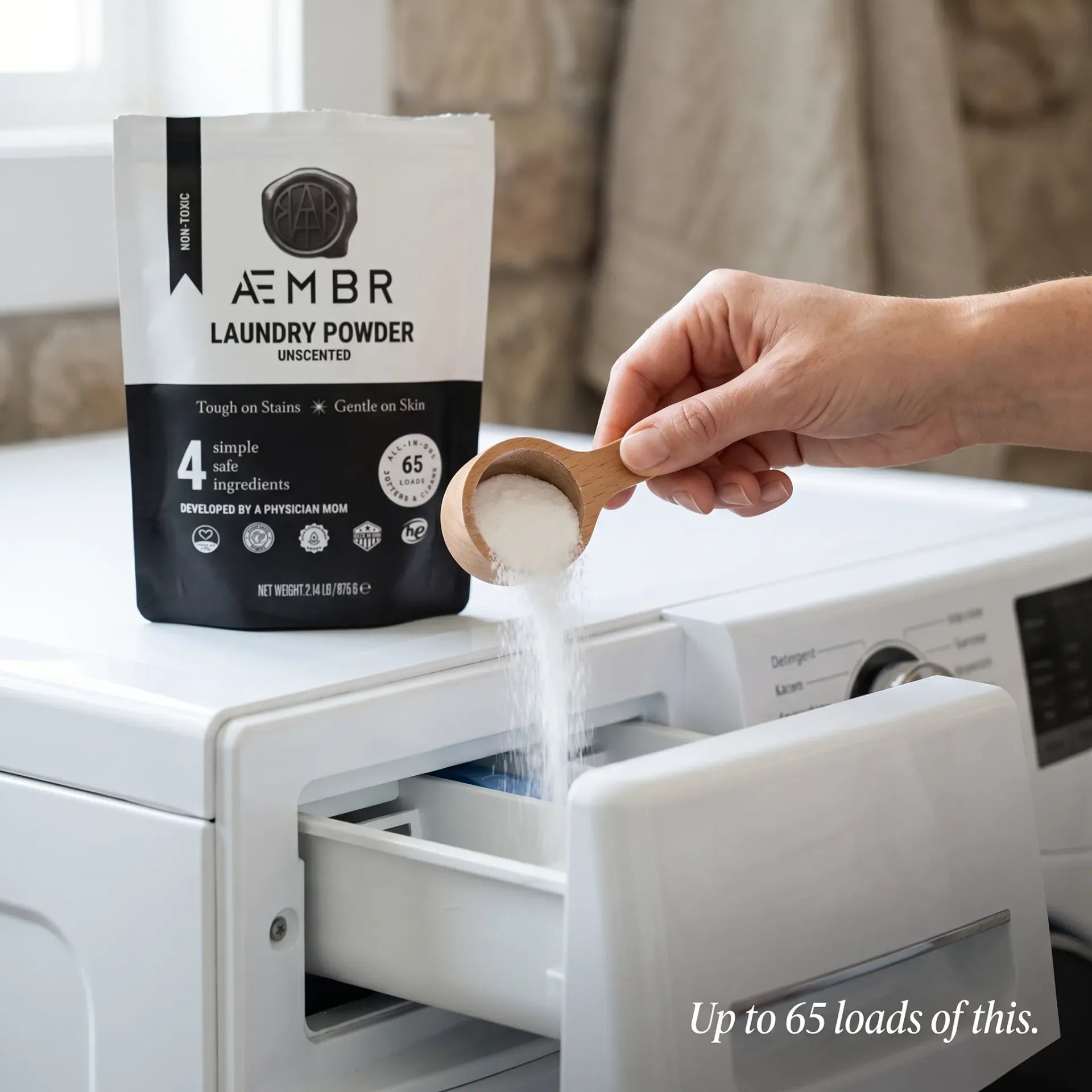
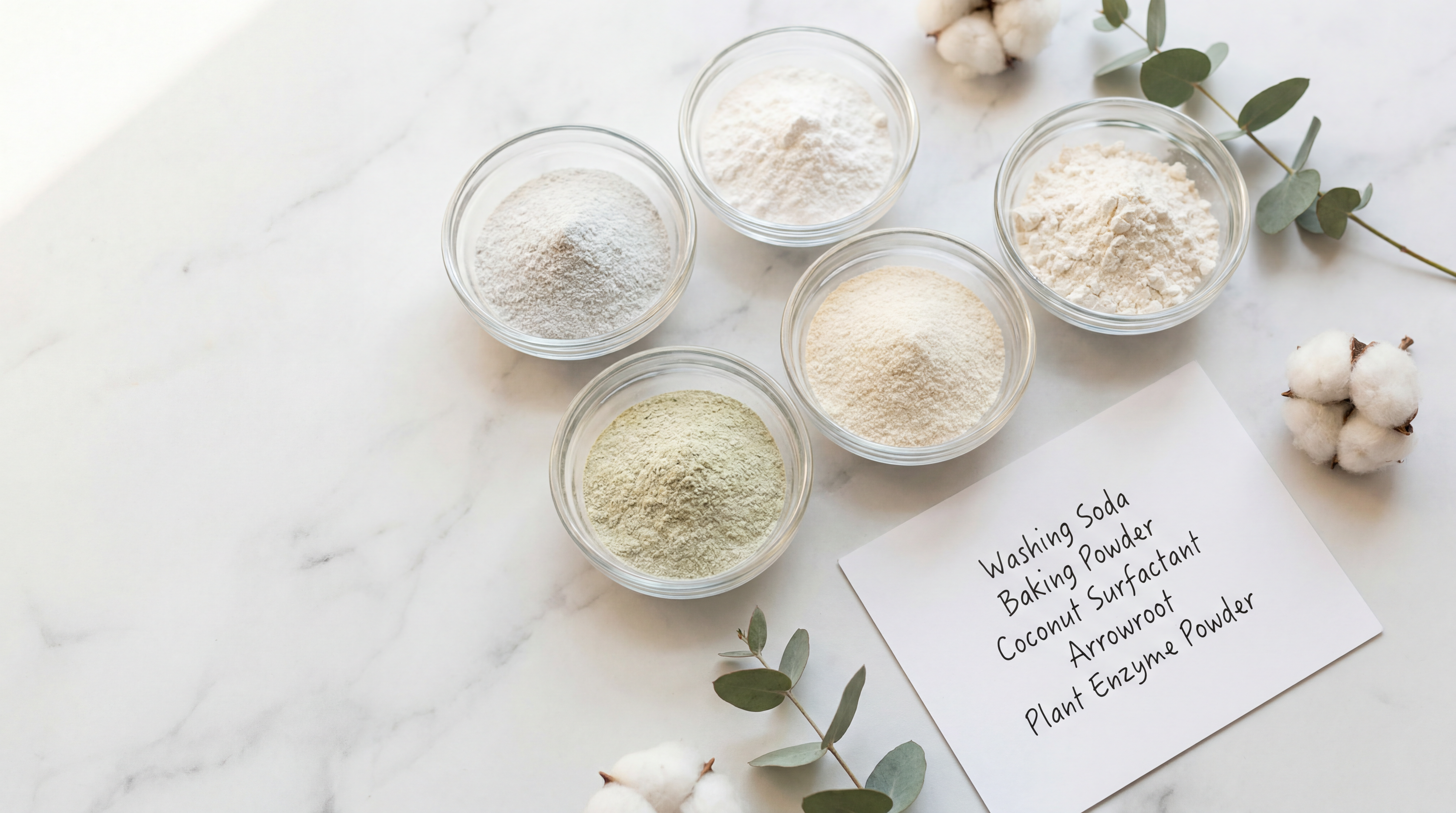
When I formulated AEMBR Laundry Powder, I started from this list — not as a marketing exercise, but because I was going to be washing my children's clothes and my own with it every week. The constraints I set for myself: no synthetic fragrance, no SLS or SLES, no optical brighteners, no MIT or formaldehyde-releasers, no synthetic dyes. Full ingredient transparency on the label.
A powder format has an additional advantage I hadn't fully appreciated until I started formulating: without water in the formula, you eliminate the need for most preservatives entirely, and you reduce the surfactant concentration needed to achieve the same cleaning result. Less chemistry to achieve the same outcome is a formulation principle that holds across medicine and personal care — and laundry detergent is no different.
If you take nothing else from this breakdown: flip your detergent bottle over and read the ingredient list. If "fragrance" is the only descriptor of what makes it smell the way it does, that's an opaque door. And opaque doors in a product that sits against your skin all day deserve more scrutiny than we typically give them.
A Note on Greenwashing
The market has responded to consumer interest in cleaner laundry products — but not always with genuine reformulation. "Natural," "plant-based," and "gentle" on a front label mean nothing without a transparent ingredient list. A product can use one plant-derived surfactant and still include MIT, synthetic fragrance, and optical brighteners. Read the back of the bottle, not the front.
Third-party verification helps: the EWG (Environmental Working Group) Verified mark, Leaping Bunny certification, and MADE SAFE certification all require ingredient review. They're not perfect standards, but they create accountability that self-labeling does not.
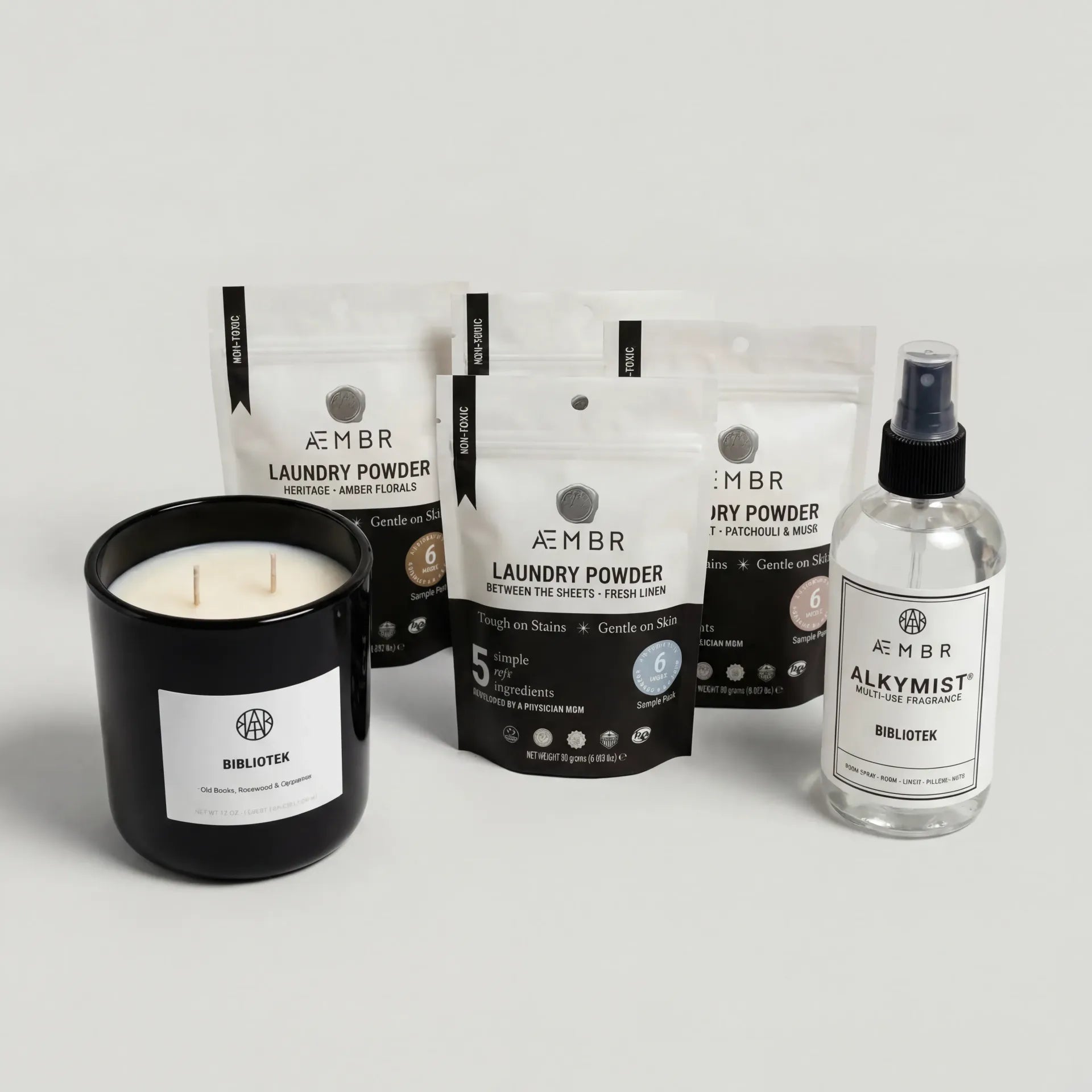
Ready to make the switch? AEMBR Laundry Powder is formulated without synthetic fragrance, SLS/SLES, optical brighteners, or any of the compounds listed in the checklist above. Full ingredient transparency — every compound listed, no trade-secret loopholes. Designed by a physician for daily family use.
Also in this series: Is Laundry Detergent Safe for Babies? and The Best Non-Toxic Laundry Detergents of 2026.
By Kristina Braly, MD — Founder, AEMBR


